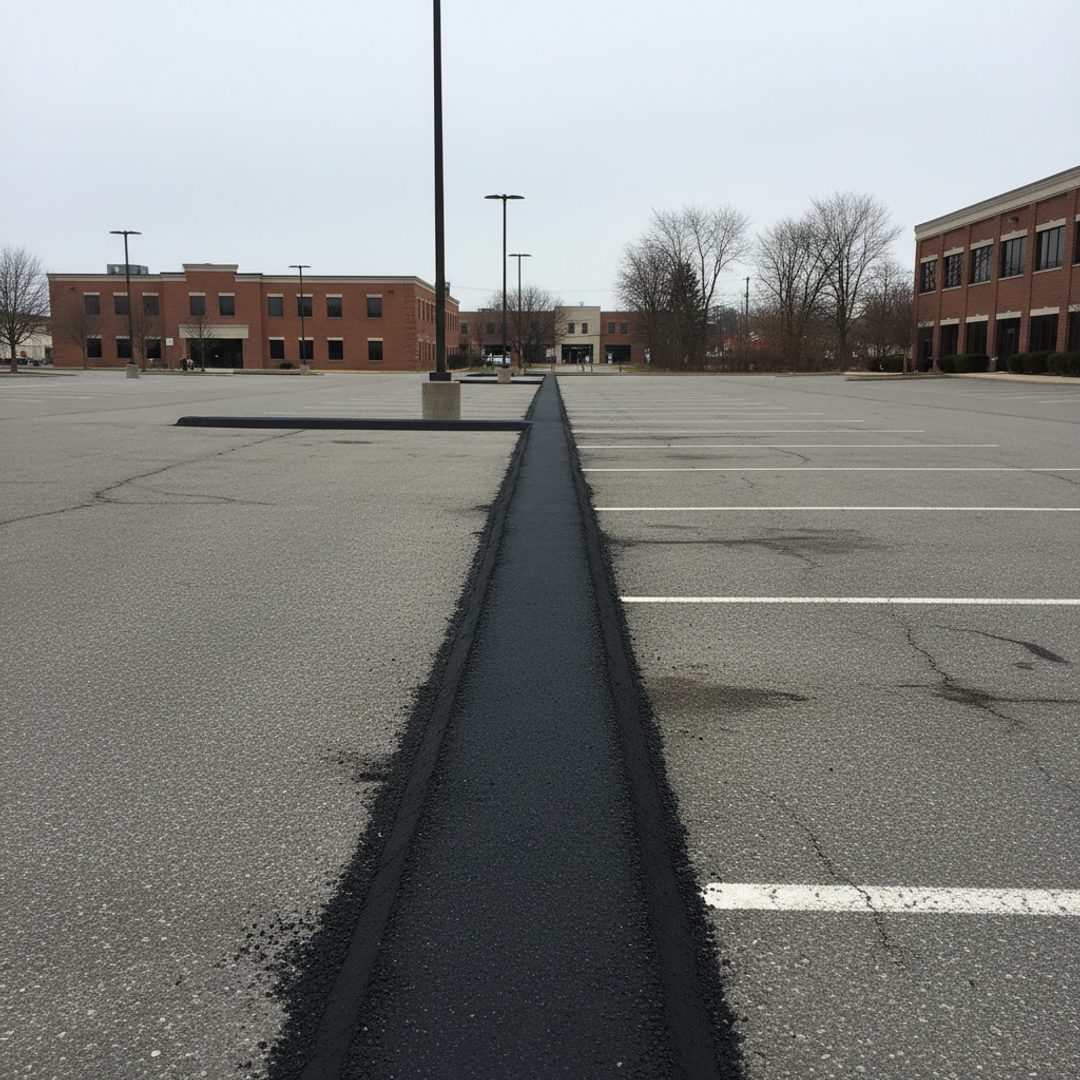
Every spring, once the frost is out of the ground, a handful of paving trucks start working their way down the blocks off Linden Boulevard and francis Lewis. Somebody's driveway got quoted at a price that seems too good to pass up. The truth is that asphalt work looks simple from the curb and isn't. A driveway that's laid wrong won't show it for a year, maybe two. Then it heaves, alligator-cracks, or turns into a puddle every time it rains. By then the contractor who did it has a different phone number.
Check the license and the insurance before anything else
In New York City, a contractor doing home improvement work, including driveway paving, is supposed to be licensed through the Department of Consumer and Worker Protection. Ask for the license number and look it up yourself, it takes two minutes. Ask for a certificate of insurance too, both general liability and workers' comp. If a crew shows up in an unmarked truck with no paperwork and says they just finished a job down the street and have leftover material, that's not a discount, that's a truck full of asphalt that's already cooling off and won't compact right.
If the job involves a curb cut, meaning the apron where the driveway meets the street, that requires a permit from the NYC Department of Transportation, not just a handshake with the crew. A contractor who's done real work in this borough knows that and won't act surprised when you bring it up.
Get a written estimate that actually says something
A real estimate names the square footage, the base depth, and how many inches of asphalt go down in how many lifts. For a residential driveway around here, you're generally looking at a base of crushed stone, RCA is common, run 4 to 6 inches deep and compacted in passes, then a binder course around 2 inches and a top course of an inch and a half. A parking lot or anything that'll see truck traffic needs a heavier base and often a thicker binder course. If the number on the page is just a total price with no breakdown of material or thickness, you don't actually know what you're buying.
Ask what happens to the old driveway. Full-depth reclamation or milling and removing the old surface is a different job, and a different price, than paving right over cracked asphalt. Paving over a bad base just telegraphs the same cracks back up through the new surface within a season or two.
Cambria Heights ground and weather work against shortcuts
A lot of the housing stock in Cambria Heights and the blocks around it, toward Laurelton and Springfield Gardens, went up in the 1930s through the 1950s. That means a lot of the driveways and old aprons out there were poured or paved decades ago, sometimes over base material that was never properly compacted to begin with. Southeast Queens is also known for a high water table and drainage that doesn't always keep up in a heavy downpour. If a contractor doesn't ask about your grading, where the water runs off the driveway, whether it's pitched away from the foundation, that's a gap. Asphalt laid flat or pitched the wrong way will pond, and standing water is what breaks asphalt down from underneath long before traffic does.
Winters here bring real freeze-thaw, typically from December into March, and the ground moves. Water gets into a hairline crack, freezes, expands, and the crack gets wider. That's why crack sealing before winter matters and why a driveway with no drainage plan will show trouble by its second winter, not its tenth.
Timing matters more than most homeowners expect
Asphalt should generally go down when ground and air temperatures are warm enough for it to compact and bond properly, roughly May through October in this area. A crew willing to pave in November when it's 38 degrees out is cutting a corner you'll pay for later. Once it's laid, plan on staying off it with foot traffic for 24 to 48 hours and holding off on driving or parking on it for about 3 to 5 days depending on the weather. Full cure, when the asphalt reaches its real hardness, takes closer to a month, which is also why we tell people not to be alarmed if a brand new driveway still looks slightly dark and soft-edged for the first few weeks. A contractor who tells you it's fine to drive on the same afternoon it's poured either doesn't know better or doesn't care.
Signs to walk away from
- A bid that's dramatically lower than three others with no explanation of why. Somewhere in that price, base depth or thickness got cut.
- Pressure to sign today because the crew happens to be in the neighborhood.
- Cash only, no contract, no address for the business.
- No mention of a permit when the job involves the curb or sidewalk apron.
- A quote with no square footage or thickness listed anywhere.
None of these by itself is proof of a bad contractor, but two or three together is a pattern worth listening to.
What a decent quote actually looks like
You want a written scope with the square footage measured, not eyeballed. You want the base and surface depths spelled out. You want a start date that isn't dependent on squeezing you in between two other jobs the same day. You want someone willing to talk about drainage on your specific lot, not a generic answer. And you want a company that'll still take your call if a crack opens up eight months later, because a driveway that never needs a single follow-up call in its life is rare.
We do paving, driveway installation, sealcoating, crack and pothole repair, resurfacing, milling, parking lot work and striping around Cambria Heights and the nearby towns, and we're happy to walk through what your specific job actually needs before you sign anything. If you want to see the range of what we handle, take a look at Superior Asphalt Solutions.