Every job below is one we do ourselves across Cambria Heights.
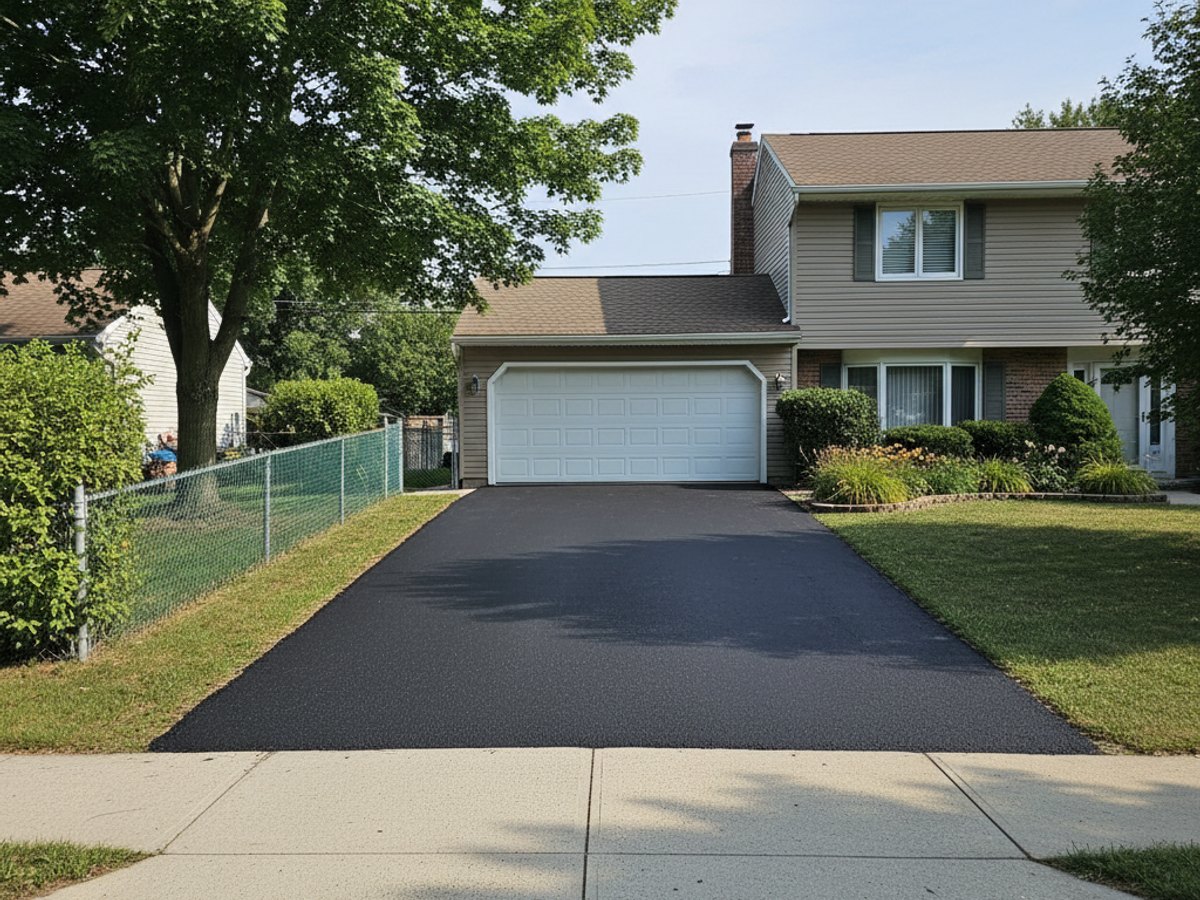
We build up a driveway, lot or roadway section in layers, a compacted stone base, a binder course, then the asphalt wearing course on top. Skipping a layer is how a driveway looks fine for one winter and heaves the next. We grade the base to pitch water away from your house or foundation before any asphalt goes down.
Most residential driveways get 2 to 3 inches of asphalt over 4 to 6 inches of compacted stone, depending on what your soil does underneath. We set the pitch so water runs to the street or a catch basin instead of sitting at your garage door. Plan on staying off it for 24 to 72 hours while it cures.
Sealcoat is the layer that takes the UV, oil and gas so the asphalt underneath doesn't. It's worth doing every 2 to 3 years, before the surface starts to gray and go brittle. We mix in sand for traction and give it a day or two to cure before you park on it again.
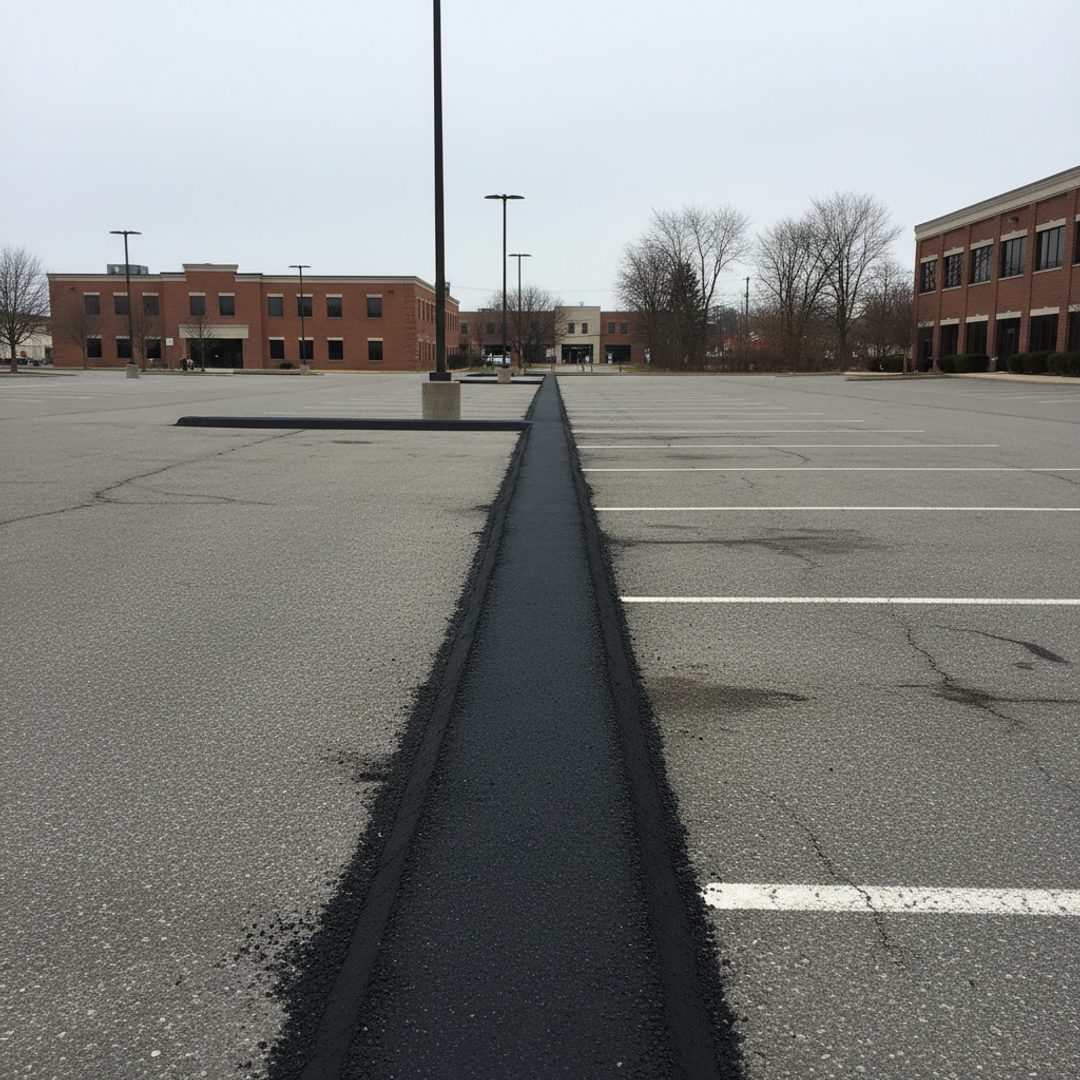
A crack in asphalt is an entry point for water, and water that freezes and expands is what turns a hairline into a pothole. We rout the crack out and fill it with hot rubberized sealant, not the cold pour stuff that pops back out by spring. Catching it early is a lot cheaper than the patch job that comes after.
We saw-cut a square edge around the failed area instead of just dumping cold patch in the hole. The bad material and soft base come out, we compact fresh stone in, then tack coat and lay new asphalt in lifts. A pothole patched this way holds, a hole filled on top of itself doesn't.
Resurfacing puts a new wearing course, usually 1.5 to 2 inches, over an existing surface that's alligator-cracked or worn but still has a solid base underneath it. We often mill the old surface first so the new layer sits at the right height against curbs and drains. It's a fraction of the cost of tearing out and starting over, when the base actually justifies it.
Commercial lots carry more weight and more turning stress than a driveway, so the base runs deeper and the asphalt itself is usually laid thicker. We grade the whole lot to pitch toward catch basins so you don't end up with standing water in the low corners. Striping and ADA spaces go in once the asphalt has had time to cure.
Milling grinds the top layer of old asphalt off before an overlay goes down, so the new surface doesn't end up sitting too high against curbs, doors and drains. It also gives us a good look at what condition the base course is actually in. We haul the millings out the same day, they don't sit around as a pile at the edge of your lot.
Faded lines and unmarked ADA spots are a liability problem as much as a cosmetic one. We lay out new striping to code, including handicap spaces and fire lanes, using paint made to hold up under vehicle traffic. This usually gets done right after paving or sealcoating while the surface is fresh.
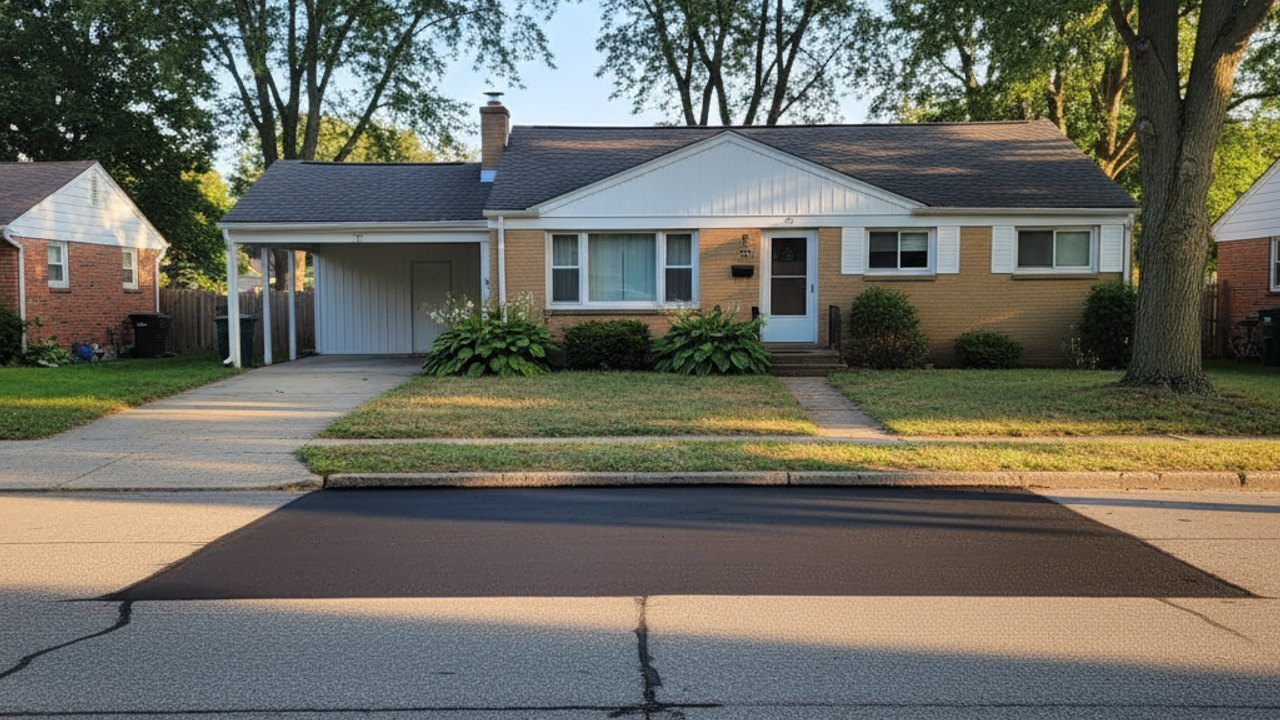
Utility cuts, sunken spots and small failed sections don't always need a full repave. We cut the damaged section out to a clean edge, match the base depth to the surrounding asphalt, and tie the new patch in so it doesn't sit proud or sunk against the old surface.
Four steps, and no surprises in any of them.
You tell us what you want doing, we look at what is actually there, and we ask the awkward questions early.
In writing, itemised, free. If something might add cost later we flag it now rather than at the end.
Same crew throughout. We cover your floors, keep the dust down and tidy up before we leave each day.
You point out anything you are not happy with and we fix it before the invoice, not after.
Coverage runs across Queens and into Nassau and Suffolk County.
Questions that come up once a project is underway.
Describe the problem and we will tell you what it probably is. No obligation.